Biophysical Context:
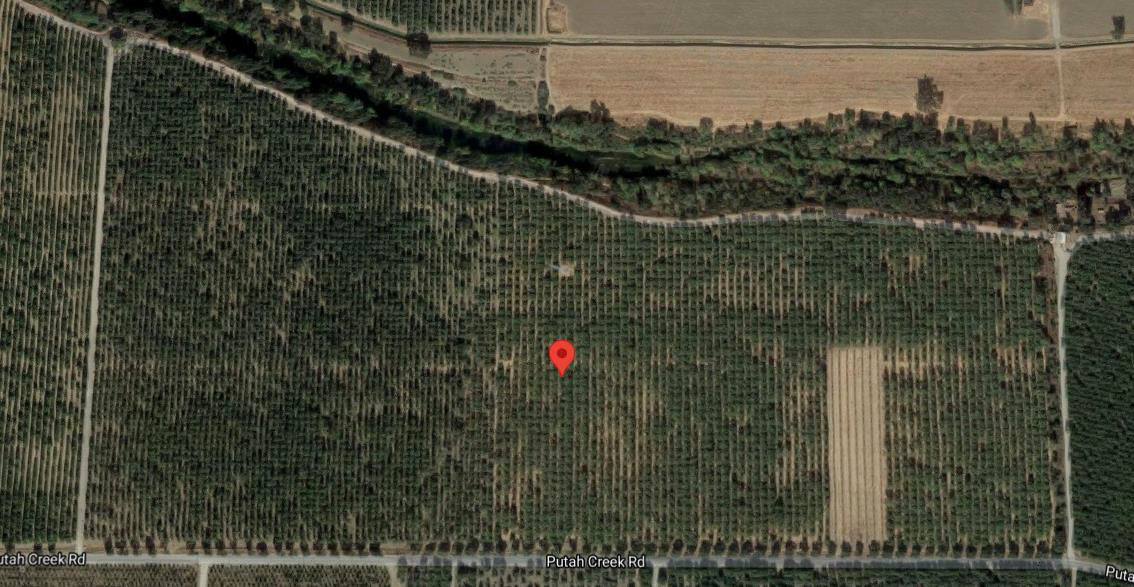
The plot I have chosen is a 100-acre field in a diversified landscape (38.52787, -121.90653). The field is located in Solano County, CA right alongside Putah Creek. Temperatures in Solano County range from a high of 89°F in July and a low of 38°F in January with approximately 14 days when the nighttime low temperature falls below freezing. The average amount of rain is 23 inches in a year and there are zero days of snowfall. The soil is Yolo Loam and comes from an alluvial parent material, meaning the soil is well drained with slow to medium runoff and natural high fertility. This land is optimum for intensive row, field and orchard crops with native vegetation consisting of annual grasses, forbs, and oaks. The surrounding area is full of diversified farming landscapes with orchards and other managed forested areas. The presence of Putah Creek creates a riparian zone along the Northern edge of the field allowing for water and nutrients to seep into the soil.
Cropping System and Management Practices:
For my 100-acre field in a diversified landscape, I am planning on creating a permaculture system consisting of a riparian forest buffer along the creek, a ground-water fed aquaculture system and an intercropped vegetative crop system. Since my plot is located in a riparian zone along the creek, I want to create a buffer to help in sustaining water quality as well as increasing soil stability. This forest buffer will also provide a foundation for my mushroom cultivation operation as I can use both saprobes such as Lion’s Mane as well as ground covering mushrooms which can increase farm profitability. This agroforestry technique also helps to create a cooler microclimate to mitigate the heat from the hot summers in the area. My proximity to the creek also allows me to create a groundwater fed pond which will form the basis of my aquaculture system. This system will help to increase biodiversity as well as helping to diversify my products by including fish and fish byproducts as well as other aquatic species. In the remaining section I will implement an intercropped vegetative crop system which will differ depending on season and rotation.

Riparian Buffer:
A riparian buffer will be created along the creek to reduce the likelihood of nutrient leaching, reduce erosion, increase nutrient levels in the soil, and increase water availability. This buffer will also serve as a windbreak and a means to establish a microclimate necessary to produce mushrooms and fern fiddleheads. Hedges and perennial grasses will be planted around the perimeter of the field to act as a barrier against nutrient loss as a way to increase nutrient use efficiency. Barriers can then be harvested for its biomass as either marketable products or materials for compost. Will also serve as windbreaks to help reduce evaporation and topsoil loss.
This buffer will consist of 3 layers of vegetation, including an unmanaged woodland area to facilitate in pulling in water and nutrients from the creek as well as acting as a layer of protection against runoff, a managed woodland area that will provide shading through its canopy and create a cooler microclimate, as well as grasses and forbs to aid in erosion control.

The trees in the undisturbed forest zone would be a diverse selection of Big-Leaf Maple, Willow, and California Black Walnut as these are native riparian species which would not require the addition of external inputs. The managed forest zone would consist of an intercropping of Oaks and Maples as these not only provide lumber and other timber products but also serve as a host for Lion’s Mane mushrooms. The trunks of the trees would be inoculated with the fungal spores to begin the cultivation of mushrooms which will provide revenue as value added products. These mushrooms also serve as saprobes which means they help to decompose the wooden logs and branches that are byproducts of the agroforestry and therefore help integrate nutrients back into the system. This nutrient integration is key as ferns will also be grown in this managed forest area. Ostrich Fern Fiddleheads are edible and can be eaten cooked or raw, which enables the use of these ferns as erosion control and groundcovers as well as an additional form of revenue for the farm. These ferns require nitrogen fertilization which can be addressed through the decomposition of mulching materials such as dried leaves, logs, and branches from the canopy trees. These ferns are more tolerant that other varieties to increase amounts of sunlight and therefore would be ideal candidates to grow while the managed forest is being established. The runoff control layer of the buffer would consist of native perennials such as Sea Lavender, California Lilacs, Hummingbird Sage, and Penstemon which serve as erosion control as well as pollinator habitats. The purpose of using native perennials is to eliminate the need of synthetic inputs while also attracting native pollinator species that can help increase ecosystem services to the rest of the landscape. The variety of species will also ensure that there are flowers blooming year round to eliminate the risk of temporal gaps in pollinator resources.
Aquaculture System:
The presence of a creek along the field also enables the creation of a groundwater fed pond in my property. I will be creating two 2-acre ponds on opposite sides of the property that also serve as water-catchment systems to capture rainwater in order to facilitate irrigation. This pond will serve as the basis for the Tilapia farming operation. One thing to consider with Tilapia is the health of the water as the water is absorbed through their bodies through osmosis and therefore and toxins present in the water will end up inside the fish. The pond will be outfitted with a dam system to facilitate the cultivation of Tilapia, as the pond will be closed off during the hatching stage but opened up during harvest to help navigate the fish from one pond to the other. Algae will be grown in the pond in order to provide a food source for the fish, and consideration will have to be taken to eliminate the presence of pathogens and parasites in the water, which can be accomplished through the use of salinity changes. An additional benefit of having a Tilapia farming operation is the creation of fish excrements which serve as nutrient for the soil and crops. This can help increase the nutrients available to the crops, can be stored for application as fertigation, and can also be packaged and sold as fertilizer for other farmers. Alongside the river connecting the two ponds on the property will be native perennials such as Agastache and Narrowleaf Milkweed which are adapted to wet soils and serve as pollinator habitats. This will ensure that there are enough resources for pollinators all along the property which increases the likelihood of proper pollination of crops.
Intercropped Vegetative Crop System:
The main crops that will be planted on the landscape will be in two sections. One section will consist of an intercropping of the Three Sisters: maize, beans, and squash. This intercropping has been used by indigenous farmers for generations and has proven to be a great combination. The maize acts as support system for the beans, the beans provide nitrogen fixation through means of their symbiotic relationship with Rhizobia bacteria, and the squash acts as a groundcover to provide shading and reduce evaporation. Major diseases and pests to consider in regards to maize are: Gray Leaf Spot, Northern Corn Leaf Blight, Common Rust, Anthracnose, Aphids, Corn Earworm and Fall Armyworm. In order to reduce risk of disease and damage, this system will be rotated after every growing season to remove the host of these fungal diseases and reduce the likelihood of infection year after year. An application of Bacillus thuringiensis can also be applied to treat pests, as well as proper sanitation of the area by removing trash and excess debris. Bean pests and diseases consist of: Anthracnose, Bean Rust, Root Rot, Aphids, Armyworm, Corn Earworm, and Loopers. Squash pests and diseases consist of: Leaf Blight, Powdery Mildew, Verticillium Wilt, Squash Mosaic, Aphids, Armyworms, and Cabbage Loopers. Similar IPM practices to those described for corn will be implemented to treat and prevent these pests and diseases, along with proper irrigation to reduce the likelihood of root rots, prover ventilation to reduce mildew, and planting when the soil is warmer to increase germination rates.
The second section will consist of an intercropping of Peppers, Tomatoes, Basil and Marigolds. Tomatoes and Peppers require similar needs in terms of pH, climate, soil type, sunlight and water, making them ideal companion plants. They are both ideal candidates for planting with Basil, though the information as to the benefits of growing them together are anecdotal. Basil can possibly act as a deterrent for aphids, flies, spider mites, and hornworms as well as improve yields. Apart from these benefits, it’s beneficial that they have similar growing requirements, making management of this field easier as the same amount of water and nutrients can be applied to the field. There is an increased risk of pest outbreaks though as they share many of the same pests, yet Marigold can serve as a deterrent for pests and diseases such as root-knot nematodes and whiteflies. In addition to intercropping as a form of pest management, other IPM practices will be integrated such as monitoring of the crops, presence of native perennials across the landscape to serve as hosts for beneficial insects, and crop rotation to remove the pest hosts. Compost will be added to the soil to increase the presence of nutrients without the need for synthetic fertilizers to be added, alongside fish emulsion and fish waste collected from the Tilapia production.
These intercropped systems will be grown during the Spring season and harvested prior to the arrival of frost, yet during the Winter season there will be a rotation of Brassicas and radishes to ensure that production is taking place year round. Lettuce is frost hardy and therefore can withstand the approximately 14 days of freezing temperatures in Solano County. Lettuce is produced fairly quickly which allows a fast turnover and increases the likelihood of revenue to the farm. One pest to be keep in consideration though are Bragada bugs as there has been an increase presence of them recently and can have detrimental impacts to the yield. Little is known as of now about to how treat the presence of these pests and therefore monitoring will be crucial to reduce the potential for outbreak. The other crop in the rotation will be Radishes, and these will be grown more so to treat the soil rather than for market. Radishes act as a form of natural tillage for the soil as the roots enlarge and grow deeper into the soil. The farm will follow a no-till management practice and therefore this will be a way to incorporate nutrients and biomass into the soil without impacting the soil food web and texture of the soil. The radishes will be allowed to bolt and go to flower to serve as a pollinator habitat but the seeds will be removed prior to their dispersal and the roots will be allowed to decompose in the soil. This will be done near the end of winter in order to allow for enough time to integrate before the seeds need to be sowed for the spring season.
Irrigation of the intercropped systems will most likely be done by drip irrigation as this tends to be efficient in water usage, though consideration will be taken to ensure that there is not a buildup of salinity in the soil as well as the destruction of soil microbiota due to the reduced amount of water in the surrounding soil. In order to address these concerns, flooding may be done, either once or several times a year, in order to flush out the salts and provide water to a wider region of the landscape. The ponds and the connecting waterway will also hopefully help to address this issue of water availability in the soil by allowing water to percolate into the soil and be absorbed by the native perennials and herbs. Precision agriculture practices will be incorporated into the landscape, such as the use of moisture sensors in the soil, to keep track of irrigation needs and help to decide if drip irrigation is the ideal irrigation system for this landscape or if a different approach should be taken such as micro sprinklers.
Sustainability Goals:
One goal is to create a water catchment system to capture, distribute and reuse rainwater. This will consist of the two ponds that are hybrid rain-fed as well as groundwater fed, as well as the use of trenches around the landscape that capture runoff and rainwater. Another goal is to make use of riparian buffers and barriers to reduce the amount of nutrient runoff in the system. A third goal is to establish a closed loop farming system which reduces the need for synthetic inputs. This will be accomplished by using the byproducts of the different production practices to serve as inputs for other systems, such as using the forest byproducts as mulch and hosts for mushroom production, using biomass from harvested crops for compost, and fish byproducts from the Tilapia production as fertilizers for the crops. Lastly, the goal is to integrate permaculture techniques to make use of spatial and temporal diversification. This consists of using intercropping to reduce evaporation, increase nutrient availability and insect diversification, crop rotation to reduce the likelihood of pest outbreaks, and no-till practices to help build up the soil health and structure.
Expected Outcomes and Limitations:
The expected outcome is to create a permaculture landscape that requires little external inputs while building up the soil health of the system and producing enough products to keep the farm economically viable. These products consist of mushrooms (both on the trunks and in the forest floor), fern fiddleheads, wood and other tree byproducts, fish from groundwater fed pond, fish emulsion and other aquaculture byproducts, vegetative crops (maize, beans, squash, tomatoes, peppers, basil, marigolds, lettuce) as well as flowers from the perennials. Certifications in Organic and Regenerative Organic Certified will be pursued in order to increase profit margins.
The nutrients provided by the fish will be used as amendments for the other crops creating an integrated aquaculture system. The riparian buffer will serve as a means of extracting nutrients from the creek and incorporating them into the soil that is accessible by the crops. The agroforestry system in the riparian buffer will also require wood logs in addition to live trees as a foundation for the mushroom cultivation. Soil testing will be required in various sections of the area to get a proper calculation of pre-planting nutrient levels and to acquire a proper amount of organic amendments necessary for optimum yields. N-P-K will be the major components taken into consideration, but micronutrients will also be considered. Mycorrhizal inoculation will occur prior to planting to account for microbial priming of nutrients.
As for limitations, the establishment of the forested riparian buffer in the 5 year time period will be difficult to accomplish. In order to facilitate this process, mature trees will be brought and planted, yet as the trees get older they become much more difficult to integrate into the system. Ideally the trees would be planted from a younger age, allowing them enough time to establish their roots as well as their presence in the “wood wide web” through means of mycorrhizal fungi. Bring in enough mature trees to create the buffer I am envisioning will require a lot of resources, not only in terms of money but also labor and ways to transport them onto the land. Another possible limitation would be the need to acquire appropriative water rights for the landscape, as the intent is to store some of the water from the creek for use in the ponds. Riparian water rights are granted automatically granted to the landowner, yet this requires that the water simply be used and not stored on the land. Essentially the aquaculture component of the landscape will be dependent on whether or not the permit could be attained to store water. This is also under the assumption that there will be sufficient rainwater and groundwater to supplement the amount needed to establish the pond.
References:
“100 Acre Family Farm Conversion.” Permaculture Design Forum at Permies, permies.com/t/28041/permaculture- projects/acre-family-farm-conversion.
Beyer, David Meigs. “Six Steps to Mushroom Farming.” Penn State Extension, 20 May 2021, extension.psu.edu/six- steps-to-mushroom-farming.
GroAction. “106 Acre Profitable Permaculture Farm – Interview with Owner Mark Shepard.” Vimeo, 6 June 2021, vimeo.com/22330819.
“Growing Outdoors.” Field & Forest Products, http://www.fieldforest.net/category/growing-outdoors.
Horvat, Hrvoje. “Here Is How You Make a Living From a 4 Acre Permaculture Orchard.” Permaculture Apprentice, 24 Aug. 2015, permacultureapprentice.com/here-is-how-you-make-a-living-from-a-4-acre-permaculture-orchard/.
Library United Diversity. library.uniteddiversity.coop/Permaculture/.
Loeks, Zach. “A Riparian Buffer Can Improve Your Farm.” Hobby Farms, 3 Nov. 2020, http://www.hobbyfarms.com/riparian-buffer-improve-farm-numerous-ways/.
“Permaculture Design.” Principles and Guidelines For Your Design, http://www.tropicalpermaculture.com/permaculture-design.html.
“POP TIP: Growing Edible Mushrooms in Your Orchard Ecosystem.” Google, groups.google.com/g/phog/c/JdzsRyWGiS8?pli=1.
“The Science Behind the Need for Riparian Buffer Protection.” ConservationTools, conservationtools.org/guides/131-the-science-behind-the-need-for-riparian-buffer-protection.
Stamets, Paul. “Permaculture with a Mycological Twist.” Fungi Perfecti, 29 Nov. 2001, fungi.com/blogs/articles/permaculture-with-a-mycological-twist.
Universal, Paras. “Profitable Permaculture Farms – From Home Scale to 100 Acre Scale Farm.” Parasuniversal, http://www.parasuniversal.com/2016/02/profitable-permaculture-farms-homescale-100-acre-scale-farm-thanks-heleen/.
“Colorado State University Extension.” http://www.extension.colostate.edu/docs/pubs/crops/04703.pdf.
“Springer Link.” link.springer.com/content/pdf/10.1023/B:AGFO.0000028988.67721.4d.pdf.
“St. Ives Orchard.” http://www.stivesorchard.co.uk/how-to-grow-mushrooms/.
“GroCycle.” grocycle.com/permaculture-farming/#:~:text=Permaculture%20is%20an%20approach%20to,Care%20for%20the%20earth.
 Benign Laughter